
IIf you’ve ever sat in a school office during enrolment season, you’ll know the scene: stacks of paper forms, three different spreadsheets that don’t quite match, and someone cross-checking attendance data by hand because the system “doesn’t talk to” the other system. It’s not that school staff aren’t capable — it’s that many schools are still running 2026 operations on tools built for a different era.
That’s starting to change, and quickly.
The Real Cost of Manual Processes
Every school we’ve spoken with tells a version of the same story. Enrolment data lives in one spreadsheet. Attendance lives in another system entirely. Timetabling is managed separately again, often by one person who happens to understand the format. When something needs to be reported — to a board, a department, or a worried parent — someone has to manually stitch it all together.
This isn’t just inefficient. It’s risky. Manual data entry means manual errors. Disconnected systems mean information gaps. And when the one staff member who understands the “system” is away sick, everything slows to a crawl.
The administrative burden this creates isn’t a minor inconvenience — it’s hours per week that could be spent on the things that actually improve a school: student support, staff development, and community engagement.


What’s Changing
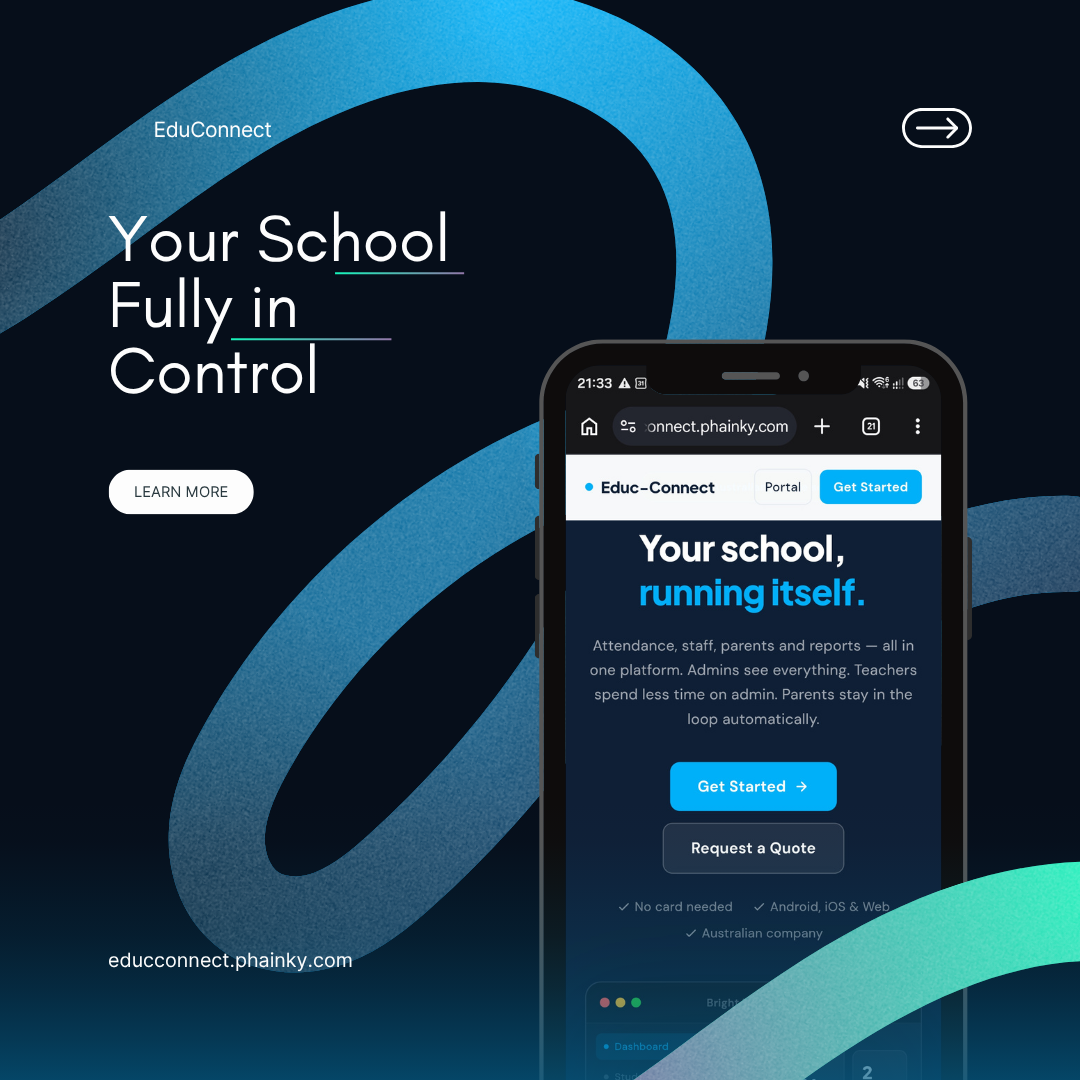
Cloud-based, multi-tenant school management platforms are increasingly replacing this patchwork approach — and for good reason. Instead of five disconnected tools, schools are moving to a single platform where student records, attendance, timetabling, academic reporting and communication all live in one place.
The shift isn’t just about convenience. It’s about visibility. When a principal can open one dashboard and see enrolment trends, attendance patterns and staffing at a glance, decisions get faster and better. When a parent can log into a portal and see their child’s attendance and progress in real time, trust in the school grows. When a teacher can update a gradebook once and have it flow through to reporting automatically, hours come back into their week.
Curious what a single, connected platform could look like for your school? Book a demo with the EduConnect team.
Why Cloud, Specifically
There’s also a practical reason this shift is happening now rather than a decade ago: cloud infrastructure has matured to the point where security, reliability and cost have all moved in the school’s favour. A well-built cloud platform means:
- No expensive on-premises servers for a school to maintain.
- Automatic updates and security patches, rather than disruptive manual upgrades.
- Access from anywhere — genuinely useful for multi-campus schools, staff working across sites, and parents who want visibility without needing to be on school grounds.
For school groups managing more than one campus, this matters even more. A shared, multi-tenant platform means every campus benefits from the same reliable system, the same security standard, and the same reporting consistency — without the cost of running separate infrastructure for each site.

What Schools Should Look For
Not every “school management system” is built the same way. Before making a change, it’s worth asking:
- Is the platform purpose-built for schools, or a generic business tool adapted for education?
- How is student and family data protected, and where is it hosted?
- Does the platform genuinely connect attendance, reporting, timetabling and communication — or are these still separate modules bolted together?
- Can it grow with the school, from a single campus to a multi-school group, without a costly re-platform down the track?
The Bigger Picture
This shift matters beyond convenience. Schools that spend less time on manual admin have more capacity for what actually improves outcomes — and school communities that are genuinely informed and connected tend to be more engaged ones.
We built EduConnect because we saw this problem up close, and because we believe Australian schools deserve better tools than a folder full of spreadsheets. If your school is still stitching systems together by hand, it might be time for a different approach.
